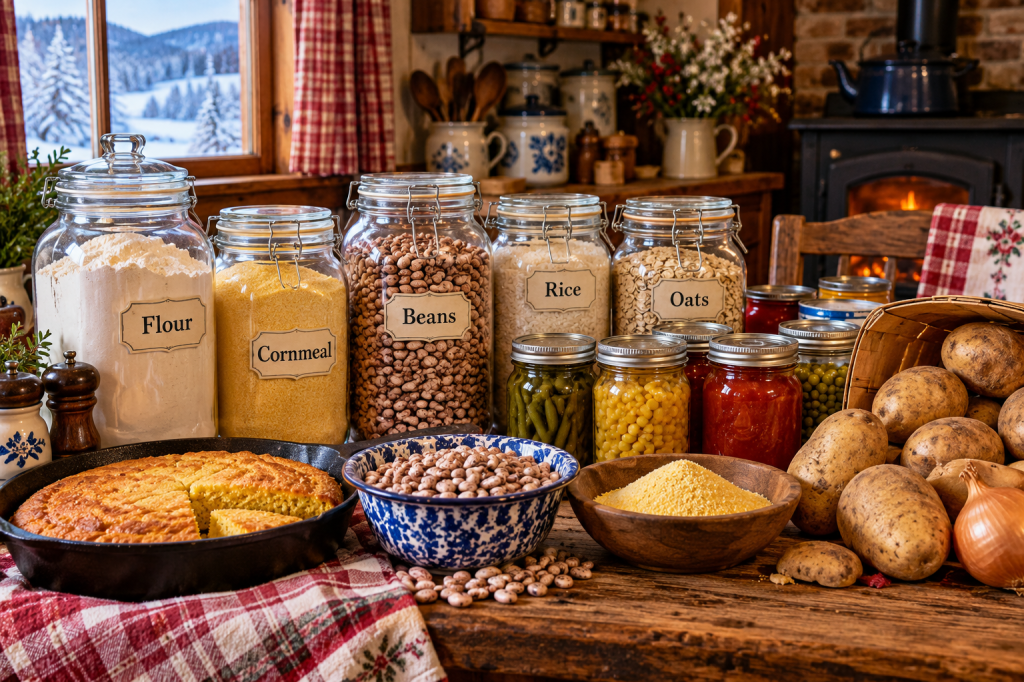
Practical pantry planning for West Virginia families, especially when winter weather keeps us at home.
Introduction: A Well-Stocked Pantry Is a Blessing
Here in the mountains of West Virginia, we know winter weather can change our plans in a hurry. Snow, ice, and freezing temperatures can make traveling difficult, and sometimes it’s best to stay home until the roads improve.
When a storm is on the way, people often rush to the grocery stores to stock up. Shelves can empty quickly, and it may take time for stores to restock.
One way to avoid that last-minute rush is to keep a pantry stocked with the ingredients your household uses regularly. You don’t have to buy everything at once or spend a fortune. Start with the basics, add to your supply as your budget allows, and learn how to turn those ingredients into several different meals.
The goal isn’t to prepare for every imaginable emergency. It’s to give yourself a little breathing room when bad weather arrives.
Start With the Basics
You don’t need a pantry full of expensive specialty foods. Some of the most useful ingredients are the ordinary ones that families have cooked with for generations.
Here are a few pantry staples worth considering:
- Flour: Useful for biscuits, pancakes, gravy, dumplings, and other homemade favorites.
- Cornmeal: A natural partner for beans, but it can also be used to make cornbread and corn fritters.
- Potatoes: A versatile ingredient for fried potatoes, soups, casseroles, and hearty side dishes.
- Dried or canned beans: An affordable source of protein that can become the main ingredient in several meals.
- Rice and oats: Useful for breakfast, side dishes, soups, and filling meals.
- Canned vegetables: Tomatoes, green beans, corn, and peas can be used in soups, casseroles, and everyday meals.
- Cooking fats: Keep the oils, butter, or other cooking fats your family normally uses.
- Sugar, honey, and basic seasonings: These help round out recipes and make simple meals more enjoyable.
Choose ingredients your family already eats. There’s little sense in filling your pantry with foods nobody wants.
Buy What You Use, and Use What You Buy
I like the idea of keeping enough pantry supplies on hand to cover several weeks of ordinary cooking. Depending on your budget and storage space, you might aim for a month or even six weeks of commonly used ingredients.
Buying larger quantities of frequently used items can sometimes save money. Shopping at a warehouse store, such as Sam’s Club, may be helpful for certain staples, provided the unit price is actually lower and you can store the items properly.
You don’t have to purchase everything in one shopping trip. Pick a few essentials each time you shop and gradually build your supply.
Keep an eye on expiration dates, store food according to package directions, and use older items before newer ones. A pantry is useful only when the food inside it is still in good condition.
Store Your Pantry Foods Properly
Good storage helps protect your food and makes it easier to see what you have.
Dry ingredients such as flour, cornmeal, rice, oats, and dried beans can be kept in clean, food-safe, airtight containers when appropriate. Glass jars and canisters can be handy because you can see what’s inside, but make sure they are suitable for food storage and have secure lids.
Label containers when necessary, especially if the contents might be difficult to identify. Keep dry foods in a cool, dry place, and follow package instructions for storage.
Canned goods should be stored in a clean, dry area. Avoid using cans that are bulging, leaking, badly dented, or otherwise damaged.
Also, remember that keeping food on hand is only part of winter preparation. If your household relies on electricity for cooking, consider how you would manage meals during a power outage. Never use a grill, camp stove, or fuel-burning cooking appliance indoors or in an enclosed space.
A Few Ingredients Can Make Many Meals
One of the best things about keeping basic ingredients in your pantry is that you can use them in different ways.
Let’s take a few familiar examples.
Beans and Cornbread
Beans and cornbread are a classic, filling meal. Dried beans can be economical, and cornbread requires only a handful of basic ingredients.
Make a pot of beans for supper, serve them with cornbread, and you may have enough left for another meal.
Beancakes: Giving Leftover Beans New Life
If you have a small amount of cooked beans left over, don’t automatically throw them away.
One of my favorite ways to use leftover beans is to make beancakes.
Leave the beans whole, add enough flour to help them hold together, and spoon the mixture into small cakes. Fry them in hot butter until they’re golden and have a buttery crust. Add a little salt, and you’re ready to eat.
I like making the cakes small because that gives them more golden crust and that wonderful buttery flavor.
It’s a simple way to turn a little leftover food into something that feels like a completely different meal.
Food safety note: Refrigerate leftover beans promptly in shallow containers, and use them within three to four days. Reheat them thoroughly before eating.
Chili From Leftovers
If you have enough beans left for a larger meal, chili is another option.
Combine the beans with ground beef, tomatoes if you have them, and chili powder or your favorite seasonings. Let everything simmer until the flavors come together.
Serve it with cornbread, and you’ve made another hearty meal from ingredients you may already have.
Beans and Fried Potatoes
Beans can also be served with fried potatoes for a simple, satisfying supper. Potatoes are useful pantry staples because they can accompany so many different foods.
These examples show why it helps to think about how ingredients work together instead of buying supplies for only one specific recipe.
Vegetable Soup Without Meat
Canned vegetables can come in handy when fresh ingredients are limited or you simply want an easy meal.
Canned tomatoes, green beans, corn, and peas can form the foundation of a vegetable soup. Add water or broth, seasonings, and any other vegetables you have available.
You don’t necessarily need meat to make a satisfying pot of soup. Use what you have, adjust the seasonings to your taste, and make enough for the household.
If you have leftovers, refrigerate them promptly in suitable containers. Soup can also be frozen in meal-sized portions if you have adequate freezer space and power to keep it safely frozen.
Plan Your Meals Before You Shop
A pantry works best when you know what’s in it.
Before shopping, take a look at your supplies and think about the meals you want to prepare during the coming week.
For example, a bag of potatoes might be used for fried potatoes one day and soup another day. A pot of beans could provide supper one evening and become beancakes or chili later in the week.
Planning helps you use ingredients before they spoil and reduces the chance of buying something you already have.
It also helps you identify what you really need instead of making an extra trip to the store because one small ingredient is missing.
Keep a simple list of pantry supplies and mark items when you use them. You don’t need a complicated inventory system. A notebook and a pencil will do the job.
Stocking Your Pantry on a Budget
Building a pantry doesn’t mean spending money you don’t have.
Start by identifying the foods your household uses most often. Then decide which items you can add to your regular grocery budget.
You might purchase an extra can of vegetables, another bag of rice, or a package of flour when the price is right. Over time, those small additions can build a useful supply.
Compare prices rather than assuming a larger package is always cheaper. Buy quantities you can use before they lose quality, and don’t let a sale tempt you into spending money needed for household bills.
A well-stocked pantry should reduce worry, not create financial stress.
A Simple Winter Pantry Checklist
Use this checklist as a starting point and adjust it to suit your household.
Dry staples
- Flour
- Cornmeal
- Rice
- Oats
- Dried beans
Canned foods
- Tomatoes
- Green beans
- Corn
- Peas
- Other vegetables your family enjoys
Everyday cooking essentials
- Cooking oil, butter, or another cooking fat
- Sugar or honey
- Salt and favorite seasonings
- Baking ingredients you use regularly
Other helpful supplies
- Potatoes and other vegetables that store well under suitable conditions
- Foods needed for special diets
- A manual can opener
- Drinking water and any other emergency supplies your household needs
Remember to consider how you would prepare food if the power went out. Choose shelf-stable foods that can be eaten safely without cooking, and make sure you have a safe plan for preparing hot meals if necessary.
Final Thoughts: A Little Planning Goes a Long Way
Here in West Virginia, we learn to respect the weather. The mountains are beautiful in every season, but winter can remind us how quickly ordinary routines can change.
Keeping pantry staples on hand, planning meals, and learning to make several dishes from the same ingredients can help a household stretch its grocery budget and be better prepared to stay home during difficult weather.
You don’t have to do it all at once. Start with the foods you use most, build your pantry gradually, and make a habit of using what you have.
Sometimes the most helpful meals aren’t made from fancy ingredients. They’re made from simple foods, a little planning, and the knowledge of how to turn what is on the shelf into supper.
And that is the heart of going from pantry to table.
What are your favorite meals to make from basic pantry ingredients? Share your ideas in the comments. I’d love to hear how other families make their pantry staples go a little further!


Leave a Reply